
AfrikanTrust
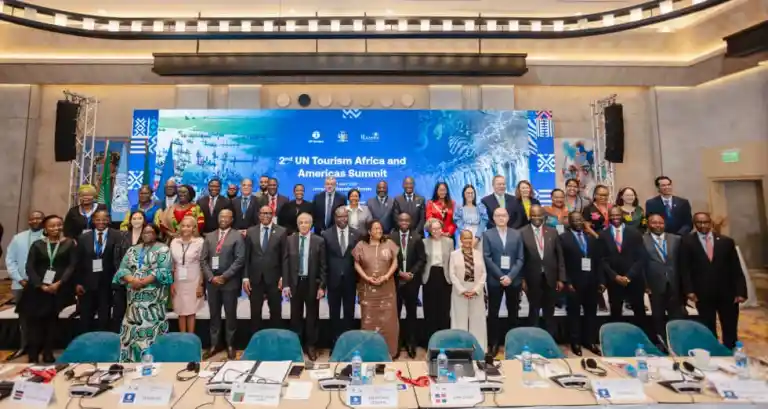
When Zambia’s Tourism Minister Rodney Sikumba announced at the 2nd UN Tourism Africa and Americas Summit in Livingstone that the country had expanded visa-free access to a total of 167 nations, it made waves—raising eyebrows across diplomatic, tourism, and security circles in Africa and beyond.
If accurate, this would mark one of the most liberal visa regimes on the continent, second only perhaps to The Gambia and Rwanda, both known for their open-door tourism policies. But the bold claim begs scrutiny: Is Zambia truly ready—logistically, diplomatically, and institutionally—for such an expansive and liberalized visa policy?
The Announcement That Sparked Debate. The minister’s statement, made in the presence of UN Tourism Secretary-General Zurab Pololikashvili, was part of a broader call to action on strengthening tourism ties between Africa and the Americas. He emphasized that visa facilitation is key to connectivity and economic revival post-COVID-19, and presented Zambia’s new visa-free regime as a tangible commitment to that vision.
According to Sikumba, Zambia had just added 53 more countries to its existing visa-free list, bringing the total to 167—a number that suggests that nearly 90% of the world’s countries can now enter Zambia without a visa.
But almost immediately, questions arose: Which countries are included? Where is the official list? And does Zambia have the infrastructure and security protocols in place to implement and monitor such a sweeping policy shift?
As of early 2024, Zambia had already granted visa-free access to citizens of several regional economic blocs, including SADC (Southern African Development Community) and COMESA (Common Market for Eastern and Southern Africa). Additionally, nationals from countries like the UK, UAE, China, and the US were eligible for visa-on-arrival or e-visas.
However, the government has yet to publish an official, updated list confirming the new batch of 53 countries. This lack of transparency raises doubts about the immediate implementation of the expanded policy.
Moreover, a visa waiver—especially for nationals from developed countries with significant outbound tourism markets like Germany, France, Canada, or Australia—often requires reciprocal agreements and vetting procedures aligned with global security standards. Without such agreements in place, Zambia may risk diplomatic pushback or even security vulnerabilities.
Zambia’s push for a visa-free regime is a laudable attempt to boost tourism and attract foreign exchange, especially after the devastating impacts of COVID-19 and climate-related crises like El Niño. But the gap between vision and capacity must not be ignored.
Security capacity remains a key challenge. Like most African nations, Zambia’s border control and immigration systems face budgetary constraints, under-resourced personnel, and outdated technology. The ability to screen high-risk travelers or track overstay violations will be stretched thin under such a broad policy.
Moreover, consular cooperation with dozens of countries is required to address issues like deportation, emergency services, and citizen protection—tasks that typically depend on functional bilateral treaties and administrative readiness. Implementing a 167-country visa-free policy requires a well-oiled consular support network, which Zambia may not currently possess at scale.
On the tourism infrastructure front, Zambia has made commendable progress in boosting hospitality capacity, particularly around Victoria Falls and national parks. But tourism growth is only sustainable when matched with air connectivity, transport logistics, and customer service standards that compete globally.
If Zambia follows through with this policy, it could position itself as a continental leader in travel liberalization. In a region where visa restrictions remain a major obstacle to economic integration, Zambia’s initiative could encourage other African nations to rethink outdated travel controls.
But Zambia must be careful not to become a regional anomaly that opens its doors faster than it can manage. A poorly executed visa-free regime could turn the country into a transit point for illicit activities or illegal migration, especially if neighbouring countries don’t adopt similar policies.
Already, critics are warning of the potential for increased human trafficking, smuggling, and terrorism risks if the visa-free list includes countries with weak identification systems or histories of international crime networks.
Is This a Tourism Strategy or Political PR?
Cynics might argue that the announcement was more symbolic than actionable, aimed at scoring quick wins in a sector hungry for good news. With Zambia seeking to rebrand itself as a hub for eco-tourism and cultural exchange, the visa announcement fits well into an optimistic narrative—but one that must be grounded in policy realism.
It also coincides with broader geopolitical shifts in Southern Africa. With Zimbabwe increasing power supply to 20 hours per day and Zambia exporting electricity to Namibia, Lusaka appears eager to project a narrative of regional leadership and economic revival.
But unless the visa policy is backed by a clear legal framework, capacity investments, and robust implementation mechanisms, it risks being remembered as an ambitious headline—not a functional policy.
Zambia’s offer of visa-free entry to 167 nations could be a gamechanger for African tourism—if executed with foresight, funding, and coordination. But for now, it remains a bold promise that awaits clarity.
The success of such a strategy lies not just in opening borders, but in managing them smartly—with the right blend of hospitality, security, and diplomacy.
Until an official list is released and implementation timelines are outlined, observers and travelers alike are left with one big question, “is this the dawn of a new era in African tourism, or a diplomatic daydream?“
Leave a Reply